Beginner Guides
Reading Tarot for Yourself vs Others
A practical guide to the difference between self-readings and reading for others, including bias, ethics, consent, boundaries, and how to avoid turning tarot into dependency.

reading for yourself and reading for someone else involve different challenges; one is too close, the other carries more responsibility. once you understand that, it becomes easier to know when to trust your feelings, when to slow down, and when to reinforce boundaries. At the beginning, many people assume they need to master everything at once. In practice, it works better to understand the reading logic first and let knowledge expand from there.
this guide compares the strengths and blind spots of self-reading, the ethics of reading for others, safer question framing, and ways to keep tarot from becoming emotional outsourcing. This guide is not trying to inflate the mystical side of tarot. It is trying to make the method usable. By the end, you should have a clearer sense of what to practice next, what not to rush, and how to tell whether a reading is actually helping.
Table of contents
Start with the big picture
reading for yourself and reading for someone else involve different challenges; one is too close, the other carries more responsibility. Just as importantly, this guide compares the strengths and blind spots of self-reading, the ethics of reading for others, safer question framing, and ways to keep tarot from becoming emotional outsourcing. Beginners often get stuck not because they cannot memorize enough, but because they treat tarot like an answer key. A useful reading is usually closer to sorting facts, emotion, fear, and possible action than declaring a final verdict.
once you understand that, it becomes easier to know when to trust your feelings, when to slow down, and when to reinforce boundaries. Once you understand that, the obsession with classifying cards as good or bad starts to loosen. You begin asking what the card is placing in front of you, where you are still avoiding reality, and what the next concrete step might be. That is where readings become sharper over time.
How to begin step by step
The people who improve fastest are rarely the ones who memorize the most first. They are the ones who repeat the basics well. first identify whether you are dealing with a distance problem or a boundary problem. You do not need every advanced trick at once. Observation, questioning, combination, and reflection do more work than most beginners expect.
The sequence below is not the only valid method, but it removes a lot of wasted motion. Especially at the beginning, structure matters more than inspiration. Intuition does come, but it becomes far more trustworthy once you have practiced looking at the card, the position, the question, and the real-life context together.
- When reading for yourself, begin by admitting that total objectivity is impossible.
- When reading for others, get clear consent and clarify how deep they want to go.
- Do not make decisions for them and do not force your own worldview through the cards.
- Translate the reading into options, risk, and suggestion rather than command language.
The most common beginner mistakes
The most common beginner problem is rarely that tarot does not work. It is that the method gets rushed. many problems in tarot are not meaning problems but relationship-position problems. The moment tarot starts replacing thought, communication, or reality-checking, it turns into an emotional echo chamber instead of a useful tool.
Seeing these mistakes early saves a surprising amount of time. It becomes easier to tell whether you need more practice, a better question, or whether you simply need to step away from the cards and do the real-life thing you already know needs doing.
- In self-readings, choosing only the interpretation that feels nicest and avoiding the harder truth.
- In client or friend readings, speaking too absolutely in order to sound impressive.
- Pulling cards about someone without their consent or treating their private material like practice data.
A concrete example
Suppose The Moon appears. In a self-reading you might instantly turn it into “they must be hiding something.” In a reading for someone else, a more mature response is to say that the picture is unclear, projection may be high, and uncertainty needs to be separated from fact before stronger conclusions are made.. Examples like this share the same pattern: the cards are not performing mystery, they are forcing specificity. The clearer the question becomes, the less tarot feels abstract and the more it starts functioning like an honest structure for seeing what is already there.
That is also why it helps to ask one simple question afterward: did this reading produce an action, or only a mood? If you finish the reading more able to see what to observe, say, stop, or try next, it did its job. If it leaves only a catchy phrase with no traction, there is still more to unpack.
How to turn it into your own practice
the most mature reader is not the one who says the most, but the one who knows their position clearly. Small, stable repetition usually teaches more than bursts of heavy information. You can track the same type of question for a week, or use one spread several times and compare how your reading changes from the first attempt to the third.
That kind of repetition slowly builds your own judgment. You begin noticing where you over-read, where you close too fast, and where your first observation was more useful than you expected. At that point, tarot stops being something you merely look up and becomes a language you can actually use.
- Before a self-reading, write down what you are most afraid the cards might say.
- Before reading for someone else, ask whether they want direction, containment, or problem-clarity.
- After reading, review whether you said anything the cards did not actually support.
When to change your approach
if self-readings leave you more anxious each time, you may need more distance; if readings for others make you feel like a rescuer, your boundaries may need reinforcement. When something feels unreadable, you do not need to jump to “I am bad at tarot.” More often the issue is simpler: the question is too broad, the practice is too thin, the spread is wrong for the job, or you are asking the cards to carry a decision that still belongs to you.
Changing your approach is not a sign of failure. It is part of learning. Rewriting the question, narrowing the scope, switching to a simpler spread, or gathering real-world information before reading again are all mature moves. The strongest readers are not the ones who never change methods. They are the ones who know when to change.
One last thing to remember
the deepest tarot ethic is not mysticism but honesty with boundaries. As long as you keep bringing the reading back to reality, back to the actual question, and back to your own field of action, tarot becomes less of an answer machine and more of a trustworthy tool.
Read these next
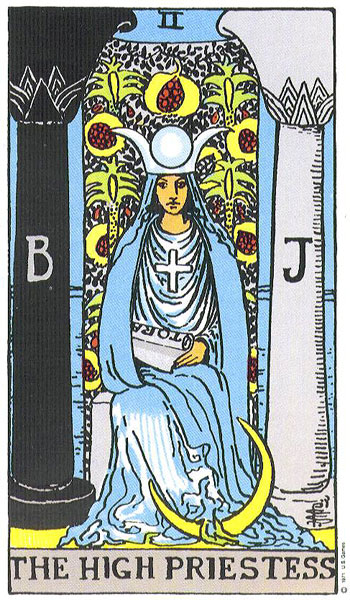 Major Arcana 2
The High Priestess
A card about intuition, restraint, and listening before reacting.
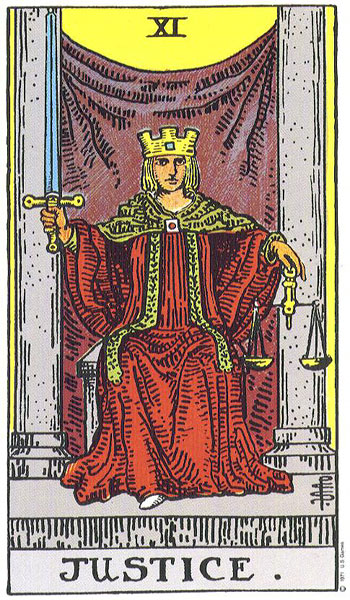 Major Arcana 11
Justice
A card about fairness, accountability, and seeing a situation clearly.
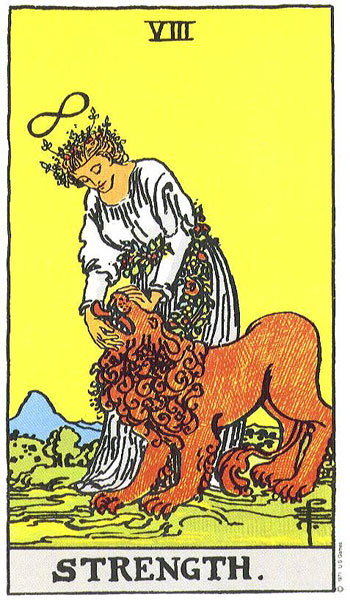 Major Arcana 8
Strength
A card about calm courage, inner steadiness, and power that does not need force.
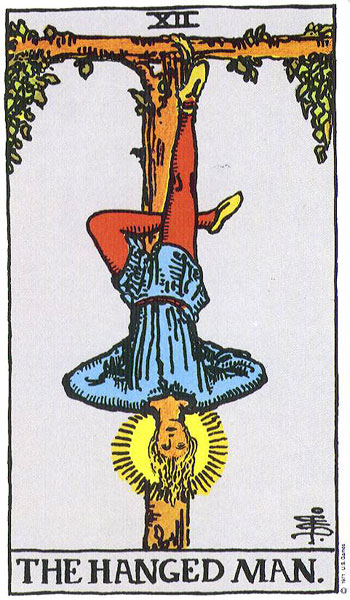 Major Arcana 12
The Hanged Man
A card about pause, surrender, and seeing differently by stopping.
Related spreads
Spread Guide
Single Card: Daily Guidance
The fastest spread on the site, designed for one clear question: what do I most need to remember today?
Spread Guide
Five-Card Relationship Cross
A five-card relationship layout for the current bond, where it is going, what blocks it, and how each side is seeing it.
Related tool pages
 Tool Pages
Ready to try a reading?
Head back to the homepage, choose a spread that fits your question, and put the method you just read into practice.
Draw on the homepage