Tool Pages
Love Tarot: How to Ask Better Relationship Questions
Love readings go blurry when the question is too big, too urgent, or entirely focused on the other person. This guide shows how to ask better love tarot questions, which cards matter most in relationship readings, and how to read tarot as real relational guidance instead of emotional amplification.
People usually turn to love tarot not because they know nothing, but because they know something and have not yet found the honest sentence for it. You may already sense distance, mixed signals, or your own over-effort. The cards help you name what is already happening.
Love tarot becomes useful when it stops trying to read another person’s mind and starts clarifying the relationship itself. Rhythm, imbalance, desire, fear, timing, and boundaries all become easier to separate. Then the reading is not just “Do they love me?” It becomes “What is actually happening here, and what should I do with that?”
How to ask a love question without getting lost
The strongest love questions include you, not only the other person. Questions like “Is it wise for me to keep pushing this?” “What is the main obstacle in this relationship?” or “What should I pay attention to if I keep investing here?” return the reading to a place where you still have agency.
By contrast, questions like “Are they my soulmate?” or “Will they choose me in the end?” often only intensify fixation. You do not get direction. You get more emotional material to loop on. Tarot works best in love when it separates the blur instead of deepening it.
Cards that often matter in love readings
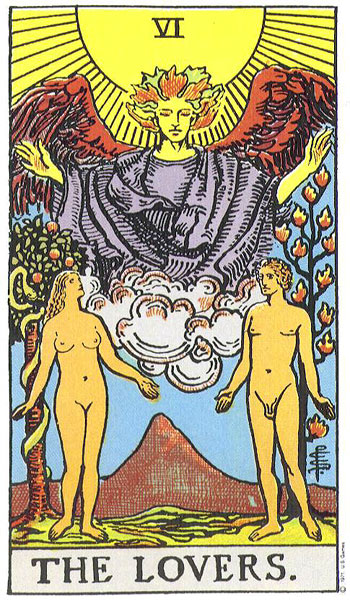
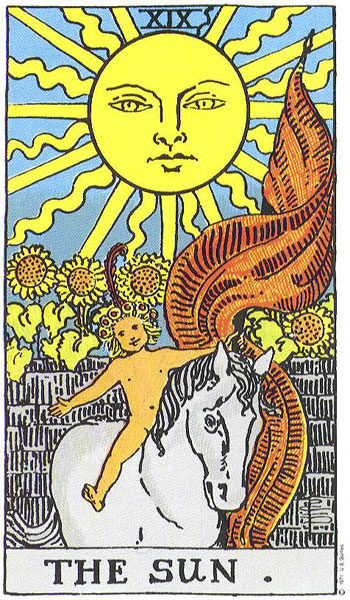
Cards like The Lovers, Two of Cups, Ten of Cups, The Sun, and The Star often signal stronger emotional reciprocity, warmth, or forward movement. But a so-called positive card does not automatically mean the relationship is easy. Sometimes it only means the feeling is real while the structure still needs work.
Other cards act more like warnings or truth-serums. The Moon often appears around uncertainty, projection, and mixed signals. The Devil can speak to attachment, obsession, or unhealthy loops. The Tower tends to show the part of the relationship that can no longer be held together by pretending.
Read for action, not just emotion
A useful love reading should eventually lead back to behavior. Do you need to initiate, pause, clarify, pull back, or admit what you are afraid of? If the reading only leaves you more tangled, the issue is often not the cards but the level of the question.
That is why three-card spreads and relationship crosses are so helpful for love. They do not just tell you whether there is attraction. They separate the current bond, the obstacle, each person’s posture, and the likely development. That makes it easier to see whether you are waiting for a person or waiting to face the truth.
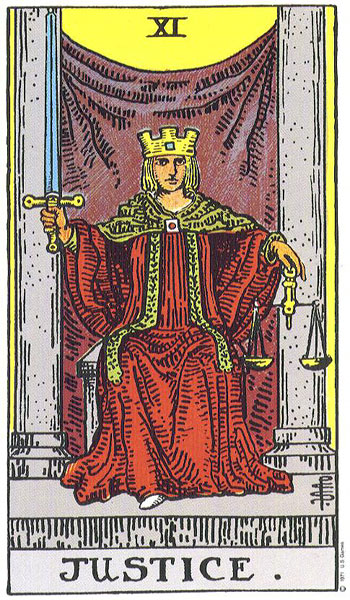
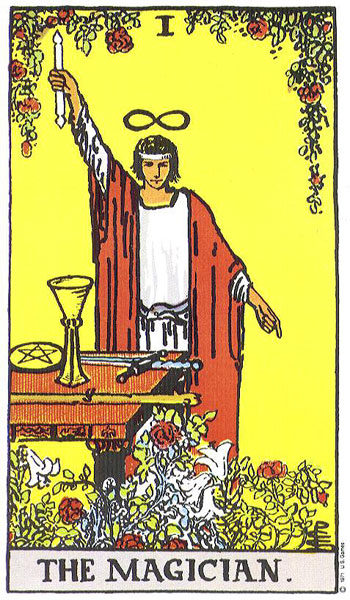
Relevant Major Arcana cards
Quick Questions
Which spread is best for a love question?
A single card is enough for a simple action question. A three-card spread works well for relationship flow. A five-card relationship cross is better when you need present dynamics, obstacles, both viewpoints, and likely development.
Can love tarot show what the other person thinks?
It can reflect their likely mindset or posture, but it is not mind reading. It becomes more useful when read alongside the actual bond and the obstacle in the spread.
Do difficult cards mean there is no hope?
Not necessarily. Difficult cards often mean the reading is being honest. Honesty is not the same thing as doom. It is often the first step toward clarity.
Can I ask about an ex?
Yes, but make the question practical. Instead of “Will they come back?” ask “What do I most need to understand if I keep investing in this old connection?”
What is the biggest mistake in love tarot?
Making the whole reading about the other person. If the question never returns to your choices, it is easier to become more attached and less clear.
Related tool pages
 Tool Pages
Yes or No Tarot: How to Ask Better Binary Questions
Yes or no tarot is not a machine that makes choices for you. It is a way to sharpen a binary question and see what sits underneath it. This guide explains what kinds of questions work well, how to read upright and reversed cards, and why one card is most useful when it is paired with real-world judgment.
 Tool Pages
Tarot Card of the Day: Why a Daily Draw Actually Helps
The real value of a tarot card of the day is not forecasting drama. It is helping you notice what matters most today. This guide explains why a daily draw builds awareness, how to turn one card into a useful ritual, and how to read a single card as guidance instead of superstition.
 Tool Pages
Career Tarot: How to Use Tarot for Work and Decision-Making
Career tarot works best when it sharpens your decision instead of absorbing your anxiety. This guide covers the best kinds of work questions, the cards most often linked to momentum, stagnation, or risk, and how to use tarot to support practical judgment rather than avoid it.
Related guides
Reading Tarot for Yourself vs Others
A practical guide to the difference between self-readings and reading for others, including bias, ethics, consent, boundaries, and how to avoid turning tarot into dependency.
Beginner GuidesHow to Read Tarot Card Combinations
A practical guide to reading tarot card combinations, including how two or three cards modify each other, what patterns to watch for, and how to turn separate meanings into one sentence.
Beginner GuidesTarot Spreads Explained
A practical guide to choosing tarot spreads, from one-card pulls to three-card timelines and five-card crosses, with advice on when each structure is actually useful.
Related spreads
 Spread Guide
Five-Card Relationship Cross
A five-card relationship layout for the current bond, where it is going, what blocks it, and how each side is seeing it.
Spread Guide
Three Cards: Past / Present / Future
The classic timeline spread for understanding how a situation developed and where it may be heading next.
Spread Guide
Single Card: Daily Guidance
The fastest spread on the site, designed for one clear question: what do I most need to remember today?
Want to test this question in a real reading?
Go back to the homepage and use one, three, or five cards to read this theme directly.
Start on the homepage