Beginner Guides
Tarot Card Meanings Explained
A practical guide to understanding tarot meanings as a system: Major Arcana, Minor Arcana, suits, number cards, court cards, and how context changes interpretation.

the key to tarot meanings is not memorizing a frozen answer for each card but learning the structure that already links the 78 cards together. once you understand the logic of major themes, suits, numbers, and courts, tarot starts to feel less like memorization and more like pattern recognition. At the beginning, many people assume they need to master everything at once. In practice, it works better to understand the reading logic first and let knowledge expand from there.
this guide explains the difference between major and minor arcana, how the four suits speak, how number cards differ from court cards, and why position and question always reshape the meaning. This guide is not trying to inflate the mystical side of tarot. It is trying to make the method usable. By the end, you should have a clearer sense of what to practice next, what not to rush, and how to tell whether a reading is actually helping.
Table of contents
Start with the big picture
the key to tarot meanings is not memorizing a frozen answer for each card but learning the structure that already links the 78 cards together. Just as importantly, this guide explains the difference between major and minor arcana, how the four suits speak, how number cards differ from court cards, and why position and question always reshape the meaning. Beginners often get stuck not because they cannot memorize enough, but because they treat tarot like an answer key. A useful reading is usually closer to sorting facts, emotion, fear, and possible action than declaring a final verdict.
once you understand the logic of major themes, suits, numbers, and courts, tarot starts to feel less like memorization and more like pattern recognition. Once you understand that, the obsession with classifying cards as good or bad starts to loosen. You begin asking what the card is placing in front of you, where you are still avoiding reality, and what the next concrete step might be. That is where readings become sharper over time.
How to begin step by step
The people who improve fastest are rarely the ones who memorize the most first. They are the ones who repeat the basics well. learn the architecture first and the details become easier to remember. You do not need every advanced trick at once. Observation, questioning, combination, and reflection do more work than most beginners expect.
The sequence below is not the only valid method, but it removes a lot of wasted motion. Especially at the beginning, structure matters more than inspiration. Intuition does come, but it becomes far more trustworthy once you have practiced looking at the card, the position, the question, and the real-life context together.
- Treat the 22 Major Arcana as large life themes before you worry about positive or negative labels.
- Use the suits to read the Minor Arcana: Wands for action, Cups for emotion, Swords for thought, Pentacles for the practical world.
- Use numbers to track development: aces begin, tens conclude, and court cards often behave like people, roles, or styles of response.
- Then return to the actual question and ask which layer the card is emphasizing in that position.
The most common beginner mistakes
The most common beginner problem is rarely that tarot does not work. It is that the method gets rushed. the moment tarot becomes a stack of fixed flashcards, interpretation loses depth. The moment tarot starts replacing thought, communication, or reality-checking, it turns into an emotional echo chamber instead of a useful tool.
Seeing these mistakes early saves a surprising amount of time. It becomes easier to tell whether you need more practice, a better question, or whether you simply need to step away from the cards and do the real-life thing you already know needs doing.
- Giving each card one rigid meaning and refusing to let the question reshape it.
- Reading a card alone without noticing whether nearby cards support, complicate, or counter it.
- Treating the minor arcana like background noise and missing the most everyday information.
A concrete example
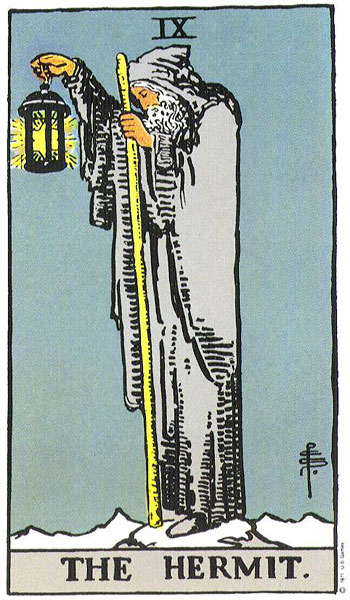
Three of Pentacles in a career reading often speaks to collaboration and visible skill. In a relationship reading, it may ask whether the bond is being built with care. The Hermit in an advice position means something very different from The Hermit in an obstacle position, even though the core card is the same.. Examples like this share the same pattern: the cards are not performing mystery, they are forcing specificity. The clearer the question becomes, the less tarot feels abstract and the more it starts functioning like an honest structure for seeing what is already there.
That is also why it helps to ask one simple question afterward: did this reading produce an action, or only a mood? If you finish the reading more able to see what to observe, say, stop, or try next, it did its job. If it leaves only a catchy phrase with no traction, there is still more to unpack.
How to turn it into your own practice
the best way to learn meanings is not trying to memorize them all at once but training your sense of structure. Small, stable repetition usually teaches more than bursts of heavy information. You can track the same type of question for a week, or use one spread several times and compare how your reading changes from the first attempt to the third.
That kind of repetition slowly builds your own judgment. You begin noticing where you over-read, where you close too fast, and where your first observation was more useful than you expected. At that point, tarot stops being something you merely look up and becomes a language you can actually use.
- Study one suit at a time instead of all 56 minor cards at once.
- Compare cards across the same number, such as the four fives or the four nines.
- After each reading, write one sentence about which layer of the card was most alive in that question.
When to change your approach
if meanings feel too many to hold, shrink back to suit and number; if they feel too flat, start practicing how cards change each other in combination. When something feels unreadable, you do not need to jump to “I am bad at tarot.” More often the issue is simpler: the question is too broad, the practice is too thin, the spread is wrong for the job, or you are asking the cards to carry a decision that still belongs to you.
Changing your approach is not a sign of failure. It is part of learning. Rewriting the question, narrowing the scope, switching to a simpler spread, or gathering real-world information before reading again are all mature moves. The strongest readers are not the ones who never change methods. They are the ones who know when to change.
One last thing to remember
tarot meanings are not a memorization contest but a living structure you gradually learn to hear. As long as you keep bringing the reading back to reality, back to the actual question, and back to your own field of action, tarot becomes less of an answer machine and more of a trustworthy tool.
Quick reference for all 78 cards
| Card | Type | Upright | Reversed |
|---|---|---|---|
| The Fool | Major Arcana 0 | New beginnings · freedom · leap of faith | Recklessness · hesitation · risk |
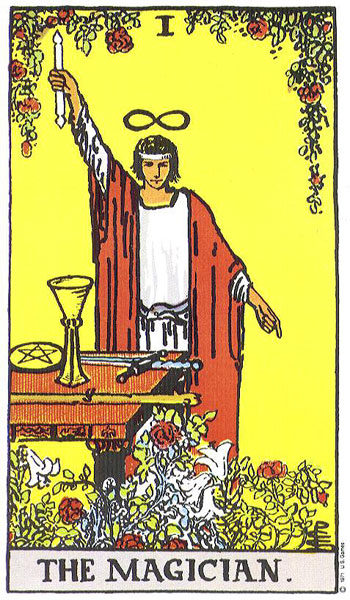
| The Magician | Major Arcana 1 | Focus · manifestation · skill | Manipulation · misused talent |
| The High Priestess | Major Arcana 2 | Intuition · subconscious · mystery | Hidden motives · blocked intuition |
| The Empress | Major Arcana 3 | Abundance · nurturing · creativity | Dependence · creative block |
| The Emperor | Major Arcana 4 | Authority · structure · stability | Tyranny · rigidity |
| The Hierophant | Major Arcana 5 | Tradition · belief · institutions | Rebellion · subversion |
| The Lovers | Major Arcana 6 | Union · values · choice | Disharmony · misalignment |
| The Chariot | Major Arcana 7 | Determination · control · victory | Lack of direction · loss of control |
| Strength | Major Arcana 8 | Courage · patience · inner strength | Self-doubt · lost confidence |
| The Hermit | Major Arcana 9 | Reflection · solitude · seeking truth | Isolation · withdrawal |
| Wheel of Fortune | Major Arcana 10 | Turning point · cycles · fate | Misfortune · disruption |
| Justice | Major Arcana 11 | Fairness · truth · cause and effect | Injustice · avoidance |
| The Hanged Man | Major Arcana 12 | Surrender · new perspective · pause | Resistance · stalling |
| Death | Major Arcana 13 | Endings · transformation · rebirth | Resistance to change · stagnation |
| Temperance | Major Arcana 14 | Balance · moderation · patience | Imbalance · excess |
| The Devil | Major Arcana 15 | Bondage · addiction · shadow | Release · awakening |
| The Tower | Major Arcana 16 | Sudden change · upheaval · revelation | Avoiding disaster · inner shift |
| The Star | Major Arcana 17 | Hope · inspiration · serenity | Despondency · lost faith |
| The Moon | Major Arcana 18 | Illusion · intuition · the unconscious | Fear lifting · clarity returns |
| The Sun | Major Arcana 19 | Joy · success · vitality | Temporary clouds · blocked light |
| Judgement | Major Arcana 20 | Awakening · renewal · reckoning | Self-doubt · ignored calling |
| The World | Major Arcana 21 | Completion · wholeness · integration | Unfinished · delays |
| Ace of Wands | Minor Arcana · Wands | a fresh spark, initiative, and the urge to begin | a rushed start or heat without direction |
| Two of Wands | Minor Arcana · Wands | seeing a wider horizon and deciding where to aim | overplanning, hesitation, or staying in strategy without motion |
| Three of Wands | Minor Arcana · Wands | looking ahead, waiting for results, and sensing expansion | waiting for outcomes without keeping the effort alive |
| Four of Wands | Minor Arcana · Wands | celebration, grounding, and arriving at a stable milestone | surface celebration without building real stability underneath |
| Five of Wands | Minor Arcana · Wands | competition, friction, and everybody pushing for space | chaotic conflict where effort is high but progress is low |
| Six of Wands | Minor Arcana · Wands | recognition, visible progress, and moving forward with credit | needing applause too much or winning on the surface without inner steadiness |
| Seven of Wands | Minor Arcana · Wands | holding your ground, defending position, and staying alert under pressure | defensiveness, exhaustion, or treating every approach like a threat |
| Eight of Wands | Minor Arcana · Wands | speed, news, and momentum arriving all at once | a pace that outruns readiness or too many moving parts at once |
| Nine of Wands | Minor Arcana · Wands | resilience, vigilance, and staying upright even when tired | being stuck in survival mode or carrying old strain too long |
| Ten of Wands | Minor Arcana · Wands | heavy responsibility, overload, and carrying more than is sustainable | refusing support and dragging the weight alone for too long |
| Page of Wands | Minor Arcana · Wands | young fire, fresh enthusiasm, and learning how to express desire clearly | short-lived enthusiasm or talking faster than acting |
| Knight of Wands | Minor Arcana · Wands | bold pursuit, direct passion, and the urge to make something happen now | charging ahead without considering consequences or purpose |
| Queen of Wands | Minor Arcana · Wands | warm confidence, magnetism, and a steady way of radiating passion | performing confidence while privately drained or overextending warmth |
| King of Wands | Minor Arcana · Wands | visionary leadership, mature fire, and knowing how to direct momentum | dominating the room, forcing pace, or using authority to cover insecurity |
| Ace of Cups | Minor Arcana · Cups | an opening of feeling, receptivity, and fresh emotional flow | emotional overflow, fast attachment, or feeling without grounding |
| Two of Cups | Minor Arcana · Cups | mutual exchange, emotional alignment, and meeting one another directly | fragile balance, fear of mismatch, or connection that stays too tentative |
| Three of Cups | Minor Arcana · Cups | shared joy, friendship, and feelings that can be celebrated together | performative closeness, emotional distraction, or celebration without depth |
| Four of Cups | Minor Arcana · Cups | emotional flatness, withdrawal, and the search for what still feels meaningful | missing the offer, shutting down, or staying numb too long |
| Five of Cups | Minor Arcana · Cups | grief, disappointment, and focusing first on what has been lost | staying with the loss so long that remaining support goes unseen |
| Six of Cups | Minor Arcana · Cups | memory, tenderness, comfort, and the emotional pull of the familiar | idealizing the past or retreating into nostalgia instead of moving forward |
| Seven of Cups | Minor Arcana · Cups | fantasy, temptation, and too many emotional options at once | confusion between desire and reality, or drifting into projection |
| Eight of Cups | Minor Arcana · Cups | walking away, emotional honesty, and leaving what no longer fulfills | staying too long in something already emotionally spent |
| Nine of Cups | Minor Arcana · Cups | contentment, pleasure, and the feeling of emotional wishes being met | excess comfort, self-indulgence, or satisfaction that stays shallow |
| Ten of Cups | Minor Arcana · Cups | emotional fulfillment, belonging, and a shared sense of wholeness | idealizing happiness or forcing a picture-perfect ending that is not real |
| Page of Cups | Minor Arcana · Cups | emotional curiosity, sensitivity, and a message rising from the heart | over-sensitivity, moodiness, or feelings that have not learned clear language yet |
| Knight of Cups | Minor Arcana · Cups | romantic pursuit, sincerity, and carrying feelings toward someone on purpose | falling for the feeling while losing touch with practical reality |
| Queen of Cups | Minor Arcana · Cups | deep empathy, emotional maturity, and quiet intuitive understanding | absorbing too much, over-identifying, or drowning in feeling |
| King of Cups | Minor Arcana · Cups | emotional steadiness, compassion, and mature feeling under pressure | appearing calm while suppressing emotion or using softness to avoid truth |
| Ace of Swords | Minor Arcana · Swords | clarity, truth, and cutting straight to the point | sharpness without care, harsh certainty, or mistaking insight for completion |
| Two of Swords | Minor Arcana · Swords | suspension, indecision, and holding still between two options | avoidance, emotional shutdown, or tension hidden behind composure |
| Three of Swords | Minor Arcana · Swords | heartbreak, painful truth, and the wound of seeing clearly | reopening old pain, clinging to hurt, or performing recovery without processing it |
| Four of Swords | Minor Arcana · Swords | rest, retreat, and the deliberate pause needed for recovery | physical stillness without mental rest, or withdrawing longer than helpful |
| Five of Swords | Minor Arcana · Swords | conflict, ego, and victories that cost more than they give back | trying to win at any cost and leaving damage behind |
| Six of Swords | Minor Arcana · Swords | transition, moving on, and finding a calmer stretch after difficulty | leaving physically without truly processing what happened |
| Seven of Swords | Minor Arcana · Swords | strategy, stealth, and trying to get away with a clever move | avoidance, half-truths, or cleverness that undermines trust |
| Eight of Swords | Minor Arcana · Swords | restriction, mental entrapment, and the sense of having no options | fear magnified into paralysis, even when some movement is possible |
| Nine of Swords | Minor Arcana · Swords | anxiety, worry, and thoughts that keep circling at night | catastrophizing, mental spirals, or carrying distress alone too long |
| Ten of Swords | Minor Arcana · Swords | an ending, collapse, and the moment the truth can no longer be avoided | holding on to the pain of an ending long after the event itself has passed |
| Page of Swords | Minor Arcana · Swords | alert curiosity, observation, and learning to speak with precision | defensiveness, nervous overthinking, or speaking before understanding |
| Knight of Swords | Minor Arcana · Swords | direct action, urgency, and charging toward a conclusion | rushing judgment, aggression, or pursuing the argument more than the truth |
| Queen of Swords | Minor Arcana · Swords | discernment, mental clarity, and honest intelligence with boundaries | cold distance, suspicion, or using sharpness as the only defense |
| King of Swords | Minor Arcana · Swords | clear authority, reasoned judgment, and disciplined thinking | rigidity, hard control, or intellect used without empathy |
| Ace of Pentacles | Minor Arcana · Pentacles | a tangible opportunity, grounded resources, and something real to build from | focusing only on reward, underusing the opportunity, or letting it pass by |
| Two of Pentacles | Minor Arcana · Pentacles | juggling demands, adapting in real time, and staying flexible under pressure | instability, overwhelm, or performing balance while nearly dropping everything |
| Three of Pentacles | Minor Arcana · Pentacles | craft, teamwork, and skill becoming visible in the real world | misaligned effort, uneven standards, or talent that is not being coordinated well |
| Four of Pentacles | Minor Arcana · Pentacles | holding on, protecting resources, and seeking security through control | clinging so tightly that flow, generosity, or growth starts to freeze |
| Five of Pentacles | Minor Arcana · Pentacles | lack, hardship, and the lived strain of material or emotional scarcity | identifying completely with scarcity and missing available support |
| Six of Pentacles | Minor Arcana · Pentacles | giving, receiving, support, and the question of fair exchange | unequal dependence, pride, or generosity that comes with strings attached |
| Seven of Pentacles | Minor Arcana · Pentacles | assessment, patience, and checking whether the long effort is paying off | passive waiting, sunk-cost attachment, or failing to adjust the plan |
| Eight of Pentacles | Minor Arcana · Pentacles | practice, craftsmanship, and improving through repetition | grinding without purpose, perfectionism, or losing the bigger picture in the process |
| Nine of Pentacles | Minor Arcana · Pentacles | self-sufficiency, earned comfort, and enjoying what you have built | isolation inside success, over-identifying with appearances, or enjoying little of what was earned |
| Ten of Pentacles | Minor Arcana · Pentacles | legacy, long-term stability, and a fuller picture of shared material security | security without warmth, family pressure, or structure that has become too fixed |
| Page of Pentacles | Minor Arcana · Pentacles | steady curiosity, practical learning, and taking the material world seriously | moving too cautiously, getting stuck in preparation, or confusing care with delay |
| Knight of Pentacles | Minor Arcana · Pentacles | reliability, patience, and the discipline to keep going steadily | stubborn slowness, over-caution, or routine that becomes inertia |
| Queen of Pentacles | Minor Arcana · Pentacles | grounded care, resourcefulness, and making stability feel warm and livable | over-functioning, over-responsibility, or carrying caretaking until it becomes depletion |
| King of Pentacles | Minor Arcana · Pentacles | stability, stewardship, and mature command of the practical world | control through money or structure, rigidity, or security that becomes possessive |
Read these next
 Major Arcana 0
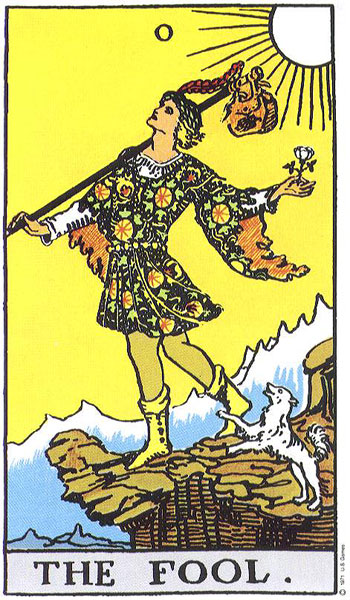
The Fool
A card about beginnings, trust, and taking the first real step.
 Major Arcana 6
The Lovers
A card about connection, values, and choices that ask for alignment.
 Major Arcana 9
The Hermit
A card about solitude, inner searching, and stepping back to find a truer answer.
 Major Arcana 14
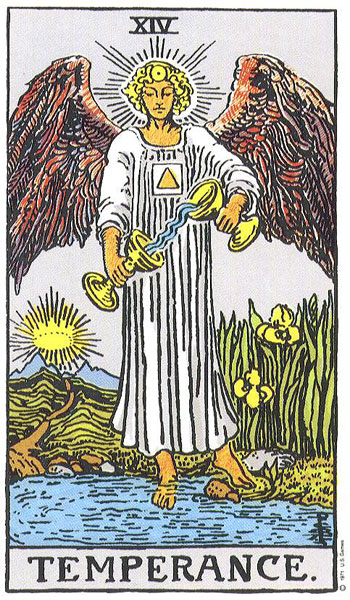
Temperance
A card about balance, integration, and finding the pace that actually works.
 Major Arcana 21
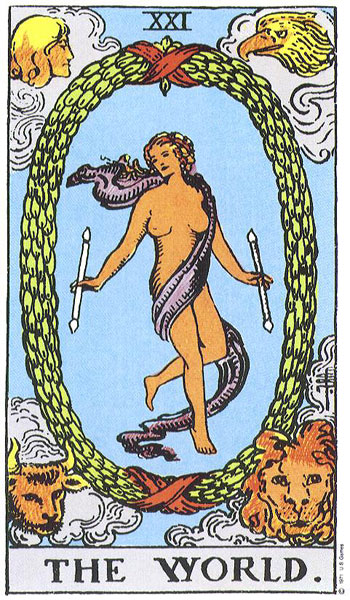
The World
A card about completion, integration, and arriving at wholeness after the journey.
Related spreads
Spread Guide
Single Card: Daily Guidance
The fastest spread on the site, designed for one clear question: what do I most need to remember today?
Spread Guide
Three Cards: Past / Present / Future
The classic timeline spread for understanding how a situation developed and where it may be heading next.
Spread Guide
Five-Card Relationship Cross
A five-card relationship layout for the current bond, where it is going, what blocks it, and how each side is seeing it.
Related tool pages
Tool Pages
Love Tarot: How to Ask Better Relationship Questions
Love readings go blurry when the question is too big, too urgent, or entirely focused on the other person. This guide shows how to ask better love tarot questions, which cards matter most in relationship readings, and how to read tarot as real relational guidance instead of emotional amplification.
 Tool Pages
Career Tarot: How to Use Tarot for Work and Decision-Making
Career tarot works best when it sharpens your decision instead of absorbing your anxiety. This guide covers the best kinds of work questions, the cards most often linked to momentum, stagnation, or risk, and how to use tarot to support practical judgment rather than avoid it.
Ready to try a reading?
Head back to the homepage, choose a spread that fits your question, and put the method you just read into practice.
Draw on the homepage